Drip Irrigation: An efficient and economical way to water your garden, saving time, money, and water.
Drip irrigation is an efficient and economical method of watering. Used commonly in arid areas like the Phoenix Arizona Metro Area with scarce water resources, the use of drip irrigation is increasing in this area. This irrigation method is typically more than 90% efficient at allowing plants to use the water applied. Unlike other forms of irrigation, such as sprinklers that are only 65-75% efficient, drip irrigation reduces runoff and evaporation. Drip irrigation applies the water slowly at the plant root zone where it is needed.
Drip irrigation has more commonly been used in commercial nursery and agricultural operations, however, commercial property owners are beginning to take advantage of its uses and benefits. As a property owner, you can use drip irrigation in your floral areas, and to water trees and shrubs.
You can learn more about drip irrigation at the ASU web site. http://sols.asu.edu/podcasts/transcripts/transcript_10.php
At Greens Keeper Landscape we want you to know how to take care of your property. If you don’t want the headache of landscape maintenance we take care of your landscape for you. To find out how we can help just give us a call at 623-848-8277.
Presented by:
Greens Keeper Landscape Maintenance, LLC
623-848-8277
http://www.commerciallandscapecare.com
greenskeeperllc@cox.net
This may be more than a little off of our normal topics for commercial landscaping we thought it would be of benefit to many people to talk about your plants and gardens during this extreme heat we have had the last few days in the Phoenix Metro area. Some simple tips to help even the healthiest plants during this heat wave.
Hot weather can stress even the healthiest garden plants, especially during the hotter months of the summer, when sporadic rain is common. Extended periods of high heat, 95 degrees and above can take a toll on your garden.
Here's a few things professional gardeners recommend:
Vegetable Gardens
Vegetables need a reliable, steady water supply to stay productive. However, even with careful watering, your veggies may suffer from heat stress.
The most common signs of heat stress in vegetables are sunburned foliage and fruits, blossom and fruit drop, and wilting.
• Water regularly and deeply.
• Mulch the soil with at least three inches of organic mulch to reduce moisture loss and help regulate soil temperature.
• Shade certain crops, such as leafy greens and lettuces, to slow bolting. They will wilt, no matter what, during periods of intense heat.
If you have anything on your property that needs repair or removal after an Arizona dust or monsoon storm please take the time to give Greens Keeper Landscape Maintenance a call at 623-848-8277 so we can help.
Presented by:
Greens Keeper Landscape Maintenance, LLC
623-848-8277
http://www.commerciallandscapecare.com
greenskeeperllc@cox.net
Fertilizing
Regular fertilizing is essential for proper growth and good color during the growing season. However, an over fertilized lawn will require more water and more frequent mowing. Do not fertilize more frequently than once a month, and follow the directions on the manufacturer's products.
Fertilizing Tips
The best time to apply fertilizer is in the evening or early morning. Make sure to water the lawn thoroughly after fertilizing it. Additionally, consider applying ferrous sulfate or iron chelates.
This will keep grass green without promoting excess growth. Use caution when applying near sidewalks, pool decks or patios, as iron can stain these areas. The application of soil sulfur twice per year has been shown to be beneficial. Applying too much fertilizer or applying too often is unhealthy for your grass and the environment.
Instead of scheduling according to the calendar, look for signs that indicate the condition of your lawn (yellowing or off-color). Or just plan to apply your fertilizer on the three day weekends during the summer.
Testing
You can have soil samples tested to make sure you add the correct and needed nutrients for your lawn’s individual needs. Taking samples at a depth of four inches will give the proper reading for most lawns.
At Greens Keeper Landscape we want you to know how to take care of your property. If you don’t want the headache of landscape maintenance we take care of your landscape for you.
It doesn’t matter to us whether you want lush lawns, desert landscaping or some type of landscaping in between, we can help. To find out how give us a call at 623-848-8277.
Presented by:
Greens Keeper Landscape Maintenance, LLC
623-848-8277
http://www.commerciallandscapecare.com
greenskeeperllc@cox.net
We are a service oriented family owned business specializing in commercial landscape maintenance.
While our normal hours of operations are from 6:00 AM to 2:00 PM we offer 24/7 service and Storm Damage Clean-up as needed by our customers.
We keep our overhead low and pass the savings on to our customers. We provide high quality service and pride ourselves on our open communication practices.
Our hourly rate is $26 per hour. Our special project rate, including sprinkler repairs, is $30. We offer convenient payment terms of 2/10 net 30.
All of our vehicles are clearly marked and all of our employees are in uniform for easy identification. Many of the small unexpected things that other companies charge for, we include.
If there are minor sprinkler repairs that are needed, most of them are also included (no charge). We accomplish this by providing an allowance for sprinkler heads, drip emitters, shrub heads, and repairs to lateral lines and drip lines. The only sprinkler issues that we would have to charge for would be main line repairs, valves & timers. And we always get these pre approved by our customers.
Unlike other companies we don't mark-up inventory, whenever possible. Another one of our popular services is safety and visibility trimming at no extra charge. This means that if you have things we think could be a liability on your property related to the landscape, we will communicate with you and work together to resolve these issues before they cause an accident or damage vehicles or buildings. If there is vegetation blocking the view of signs or safe passage in and out of the parking lot, trees blocking safety lighting, we will keep those items at their smallest manageable size (no charge).
We don't charge anything for the installation of winter lawns. This means you do not pay anything for scalping and removal of summer lawn, sprinkler tune up, and top dressing where needed. And the seed is provided at the market price. We also offer a full range of tree trimming options for our customers including emergency storm damage clean up and tree removal. Lawn fertilizer is done quarterly for the price of fertilizer only.
We will strive to keep your landscape safe, clean and beautiful. At the same time keeping your costs as low as possible.
We meet or exceed the highest insurance standards, with $2,000,000 business liability, $1,000,000 commercial auto, and $1,000,000 workman's comp. And we can list you (the customer) as additional insured at no extra charge.
We can Help! Please contact us at; Sales: 623-848-8277 We serve the entire Phoenix Metro Area.
Presented by:
Greens Keeper Landscape Maintenance, LLC
623-848-8277
http://www.commerciallandscapecare.com
greenskeeperllc@cox.net
Many people take their electric power for granted. You walk over to the wall and flip a switch and you have light and power. Yes, that is the way it normally works. But every so often and for a period of time from seconds to many hours something stops your power company from bringing their service to you. During an Arizona summer the monsoon storms will cause power outages.
If you are a property manager of an apartment building you will want to keep the following supplies on hand. You could keep other spares that could loaned to tenants as you see fit. Coordinate with your maintenance staff.
We normally think of a storm but it can be an accident or mechanical failure that interrupts your electricity.
Having an emergency power outage kit will make getting through this event much easier. So what should be in your kit? This list is for power outages of two hours or less.
Light and Power
A box of candles and matches
Flashlights and spare batteries
Camping lantern and fuel
Portable generator
Communication
Portable radio and spare batteries
Fully charged cell phone
Battery powered lap top or tablet computer
Food
Snacks, candy bars and canned goods
Leave refrigerators and freezers closed
Water
Several cases of recently purchased bottled water
Bags of ice
Keep in mind that the local region, season and weather conditions may require items of protection from the elements.
At Greens Keeper Landscape we want you to know how to take care of your property. If you don’t want the headache of landscape maintenance we take care of your landscape for you. To find out how we can help just give us a call at 623-848-8277.
Presented by:
Greens Keeper Landscape Maintenance, LLC
623-848-8277
http://www.commerciallandscapecare.com
greenskeeperllc@cox.net
Here are some Independence Day fun facts, history and trivia. On July the 4th, 1776, the Declaration of Independence was approved by the Continental Congress. Thereafter, the 13 colonies embarked on the road to freedom as a sovereign nation. This most American of holidays is traditionally celebrated with parades, fireworks and backyard barbecues across the country. As you send out your July 4th party invitations, take a minute to think about how much you really know about what we are celebrating.
The major objection to being ruled by Britain was taxation without representation. The colonists had no say in the decisions of English Parliament.
In May, 1776, after nearly a year of trying to resolve their differences with England, the colonies sent delegates to the Second Continental Congress. Finally, in June, admitting that their efforts were hopeless; a committee was formed to compose the formal Declaration of Independence. Headed by Thomas Jefferson, the committee also included John Adams, Benjamin Franklin, Philip Livingston and Roger Sherman. On June 28, 1776, Thomas Jefferson presented the first draft of the declaration to Congress.
Betsy Ross, according to legend, sewed the first American flag in May or June 1776, as commissioned by the Congressional Committee.
Independence Day was first celebrated in Philadelphia on July 8, 1776.
The Liberty Bell sounded from the tower of Independence Hall on July 8, 1776, summoning citizens to gather for the first public reading of the Declaration of Independence by Colonel John Nixon.
June 14, 1777, the Continental Congress, looking to promote national pride and unity, adopted the national flag. “Resolved: that the flag of the United States be thirteen stripes, alternate red and white; that the union be thirteen stars, white in a blue field, representing a new constellation.”
The first public Fourth of July event at the White House occurred in 1804.
Before cars ruled the roadway, the Fourth of July was traditionally the most miserable day of the year for horses, tormented by all the noise and by the boys and girls who threw firecrackers at them.
The first Independence Day celebration west of the Mississippi occurred at Independence Creek and was celebrated by Lewis and Clark in 1805.
On June 24, 1826, Thomas Jefferson sent a letter to Roger C. Weightman, declining an invitation to come to Washington, D.C., to help celebrate the 50th anniversary of the Declaration of Independence. It was the last letter that Jefferson, who was gravely ill, ever wrote.
Both Thomas Jefferson and John Adams died on Independence Day, July 4, 1826.
The 56 signers of the Declaration of Independence did not sign at the same time, nor did they sign on July 4, 1776. The official event occurred on August 2, 1776, when 50 men signed it.
The names of the signers of the Declaration of Independence were withheld from the public for more than six months to protect the signers. If independence had not been achieved, the treasonable act of the signers would have, by law, resulted in their deaths.
Thomas McKean was the last to sign in January, 1777.
The origin of Uncle Sam probably began in 1812, when Samuel Wilson was a meat packer who provided meat to the US Army. The meat shipments were stamped with the initials, U.S. Someone joked that the initials stood for “Uncle Sam”. This joke eventually led to the idea of Uncle Sam symbolizing the United States government.
In 1941, Congress declared 4th of July a federal legal holiday. It is one of the few federal holidays that have not been moved to the nearest Friday or Monday.
Thirty places nationwide with “liberty” in their name. Liberty, Missouri (26,232) boasts the highest population of the 30 at 26,232. Iowa has more of these places than any other state at four: Libertyville, New Liberty, North Liberty and West Liberty.
Eleven places have “independence” in their name. The most populous of these is Independence, Missouri, with 113,288 residents.
Five places adopted the name “freedom.” Freedom, California, with 6,000 residents, has the largest population among these.
There is one place named “patriot” — Patriot, Indiana, with a population of 202.
And what could be more fitting than spending the day in a place called “America”? There are five such places in the country, with the most populous being American Fork, Utah, with 21,941 residents.
Happy Fourth Of July
From the Folks at:
Presented by:
Greens Keeper Landscape Maintenance, LLC
623-848-8277
http://www.commerciallandscapecare.com
greenskeeperllc@cox.net
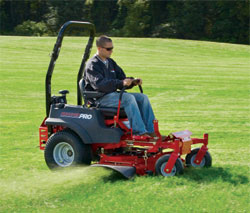
This weeks commercial landscape tip from Greens Keeper Landscape Maintenance is how to properly mow your green lawn areas.
Mowing
Avoid mowing too closely (scalping). Grass that is too short uses more water. Adjust mowers so the grass height is maintained within the ranges listed below:
Hybrid Bermuda ½ - 1 inch
Common Bermuda 1 ½ - 2 inches
Perennial rye 1 ½ - 2 inches
Your mowing schedule also is important. During the peak growing season, which in Arizona is the months of May through September, cut hybrid Bermuda grass kept at ½ inch in height every two to three days. If grass is kept at a height of 1”, mow every 4 - 5 days. Mow common Bermuda grass to 1 ½ inches in height every five to seven days.
Tips
Don’t remove more than one-third of the grass at a time.
Keep mower blades sharp.
If you mow frequently, you shouldn’t need to bag your clippings.
Avoid following the same pattern each time you mow.
Increase the mowing height by 25% in shady areas.
At Greens Keeper Landscape we want you to know how to take care of your property. If you don’t want the headache of landscape maintenance we take care of your landscape for you. To find out how we can help just give us a call at 623-848-8277.
Presented by:
Greens Keeper Landscape Maintenance, LLC
623-848-8277
http://www.commerciallandscapecare.com
greenskeeperllc@cox.net